It will appear ‘out of the blue’ – midnight blue.
At this time – humanity will remove its consciousness from the 3D grid of and spiral through the ‘stargate’ of higher light. That time is almost here. we sense it, feel it, know it to be true or else we would not be here questing for answers.
On the pampa, south of the Nazca Lines, archaeologists have now uncovered the lost city of the line-builders, Cahuachi. It was built nearly two thousand years ago and was mysteriously abandoned 500 years later. New discoveries at Cahuachi are at last beginning to give us insight into the Nazca people and to unravel the mystery of the Nasca Lines.

Cahuachi is emerging as a treasure trove of the Nazcan culture. As Orefici and his team excavate, discoveries of paintings on preserved pottery, and the ancient technique of weaving that the Nazca people developed, have given an insight into how the lines may have been made, and what they might have been used for, more than 1500 years ago.

Most exciting is the discovery of human remains. Stunningly preserved in the dry soil of the Peruvian desert are the mummified bodies of the Nazcan people themselves.
Skulls from Ica, Peru
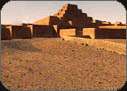
Originally believed to have been a military stronghold, Cahuachi is now reckoned to be a place of ritual and ceremony, and Orefici’s stunning new evidence confirms this idea. Cahuachi is now revealed to have been abandoned after a series of natural disasters destroyed the city. But before they left it, the Nazcan people covered the city in the arid pampa sand where, until recently, it has remained a barely visible mound in the desert.
Preserving the Nazca Lines
It is difficult to keep the Nazca Lines free from outside intervention. As with all ancient ruins, such as Machu Piccu, weather by wind and rain, and human tampering will take their toll on these ancient Lines.
In recent years the Nazca Lines have suffered gradual destruction, as tomb raiders seeking pre-Inca artifacts scar the terrain with hundreds of burrows, garbage, among other waste material. A boom in copper and gold mining – including a mine built in 1997 a few feet from a 2,000-year-old, two-mile-long trapezoid — is defacing parts of the Nazca Lines with tracks from truck traffic.
Over the past decade, advertisers and political campaigns have carved huge messages in the rock and sand between the ancient designs in this region 250 miles south of Lima.
In 1998, floods and mudslides from the El Nino weather pattern seriously eroded several figures.
As electricity reaches the growing local population, utility companies are running power cables over and around the site.
The damage to the Lines underscores Peru’s desperate struggle to preserve its national patrimony. Archaeologists say they are watching helplessly as the quest for scholarship and conservation in a country viewed as the cradle of New World civilization is losing out to commercial interests, bleak poverty and the growing popularity of heritage sites as tourist attractions.