Bahariya Mummies, Golden Mummies
April 17, 2001
I was introduced to Zahi Hawass by our mutual friend, Sherif. Zahi is in charge of the Giza Plateau. Zahi mentioned an ongoing number of discoveries made in the Bahariya Oasis since it was first discovered. Of the 10,000 mummies They anticipated were there, 450 have been discovered to date – each unique in its own way.
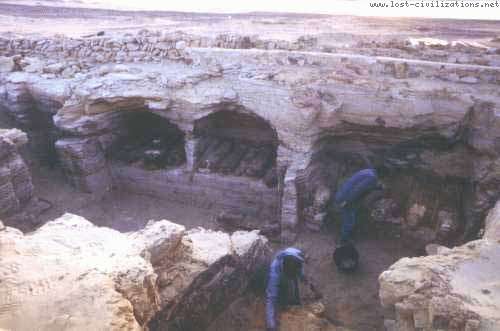
About the Bahariya Oasis –
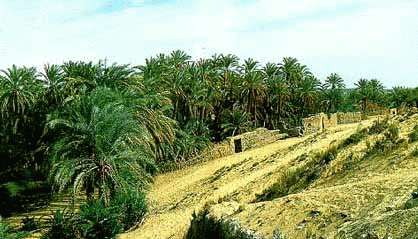
Set in a depression covering over 2000 sq. km., Bahariya Oasis is surrounded by black hills made up of ferruginous quartzite and dolorite. Most of the villages and cultivated land can be viewed from the top of the 50-meter-high Jebel al-Mi’ysrah, together with the massive dunes which threaten to engulf some of the older settlements.
The Oasis was a major agricultural center during the Pharaonic era, and has been famous for its wine as far back as the Middle Kingdom. During the fourth century, the absence of Roman rule and violent tribes in the area caused a decline as some of the oasis was reclaimed by the sand.
Wildlife is plentiful, especially birds such as wheatears; crops (which only cover a small percentage of the total area) include dates, olives, apricots, rice and corn.
There are a number of springs in the area, some very hot, such as Bir ar-Ramla but probably the best is Bir al-Ghaba, about 10 miles north east of Bawiti. There is also Bir al-Mattar, a cold springs which poors into a concrete pool
Otherwise near the Oasis is the Black and White deserts, though traveling to the White desert seems not practical from the oasis. The Black Desert was formed through wind erosion as the nearby volcanic mountains were spewed over the desert floor.
Finally, there are the ruins of a 17th Dynasty temple and settlement, and nearby tombs where birds were buried.
Ancient Mayor’s Tomb, 102 Mummies Found in Egypt
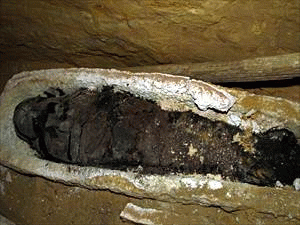
May 24, 2000 – Reuters – Bahariya Oasis – Egypt
Egyptian archaeologists said Tuesday they had uncovered the tomb of a powerful but enigmaticPharaonic ruler and 102 Greco-Roman mummies, some wearing gold masks.
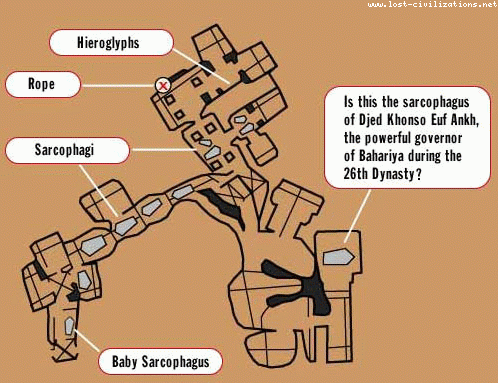
Gad Khensu Eyuf’s 33-foot-deep tomb will furnish clues about a provincial mayor who dared in his lifetime to represent himself in temples in the same style as kings, Zahi Hawass, director of the Giza plateau, told Reuters.
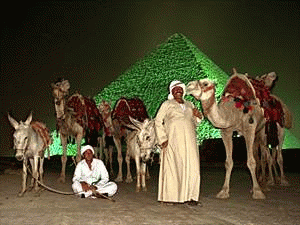
He said his team of 20 had discovered the tomb of Eyuf in April in a tomb complex of nobles discovered in the 1930s in the town of Bawiti in Bahriya oasis, 250 miles southwest of Cairo, in the Western Desert.
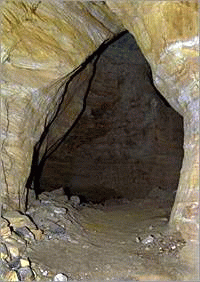
Archaeologists and restorers have battled with ropes, ladders, dust and jagged rock since March inside a 1,000 sq. foot labyrinth to uncover unique statues, colorful wall reliefs, pottery and jewelry, said Hawass.
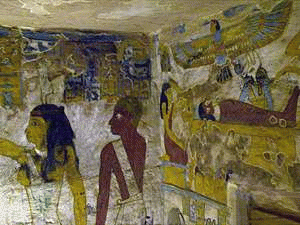
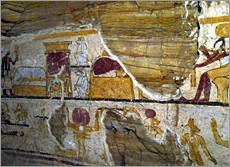
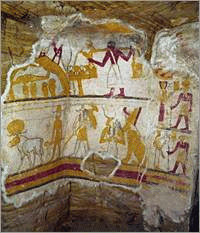

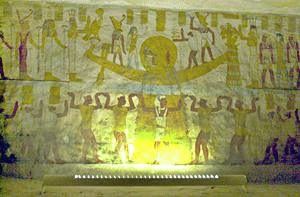
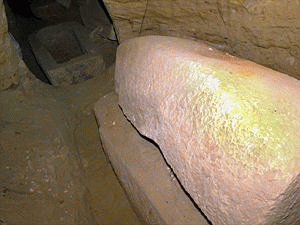
Some of the walls are covered in vivid depictions of Eyfu being prepared for the afterlife by Anubis, the god of death. Eyuf’s 12-ton sarcophagus is adorned with rock-carved portraits and profiles of the mayor.
One surprise awaited the archaeologists in Eyuf’s tomb.
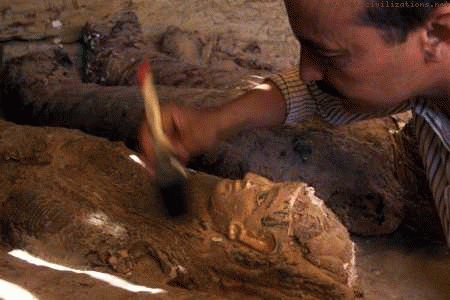
“We found large quantities of hematite (a valuable iron ore),” Hawass said. “When I entered the tomb I felt the hematite prickle my chest like thorns. Perhaps Eyuf put the yellow powder to protect his tomb from unwelcome visitors.”
Hawass said archaeologists had searched in vain for almost a century over the exact location of the burial place of Eyuf, the mayor of Bahriyah in the 26th dynasty in the reign of Pharaoh Apris (598-570 BC) who built a temple called Apris in the oasis.
Influential Mayor
“So many archaeologists have sought to find the tomb of Eyuf because he was so influential,” said Hawass. “They also wanted to find out more information on why he was so influential.”
He said pioneering Egyptian archaeologist Ahmed Fakhry had discovered in the 1930s the burial complex of nobles who served Eyuf and were buried beside him. But Fakhry failed to uncover the tomb of the mysterious mayor himself, Hawass said.
More than a decade after Fakhry’s discoveries, villagers built houses over Eyuf’s suspected resting place. It was only in March that Hawass and his team were given permission to destroy the houses and continue the search for the tomb.
Hawass’s team also uncovered 102 mummies in seven tombs dating to the later Greco-Roman period in a 2.3 sq mile necropolis some six miles away from Eyuf’s tomb.
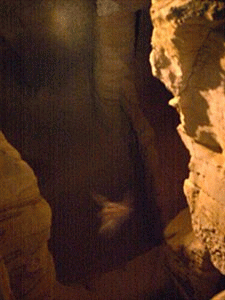
Packed tightly in small caves carved into rock, many mummies still bore colorful scenes painted by mortuary artists. Others had shed their 2,000-year-old wrappings to reveal rusty-colored skin and bone.
One female mummy carried a child mummy on her stomach, while another mummy bore a mask showing people bearing offerings to ancient Egyptian gods. No intricate paintings adorned the walls like those on the tomb of Eyuf.
“We were able to date the mummies mainly by the way they had been mummified,” said archaeologist Khaled Salah. “During the Roman period, the intestines of the deceased were left inside the body and masks were plastered on to their faces before the bodies were sealed in their tombs.”
Mummies Found Last Year
Last year, archaeologists discovered 105 mummies of high-ranking Roman Egyptians in four tombs at the same site. The necropolis was dubbed “The Valley of the Mummies” after a survey last year suggested that up to 10,000 mummies could be lying under the soft sandstone.
` `The main difference in the mummies we found this year from last year is that some of them date to the Greek period (332-30BC),” said Salah as he pointed out a mummy of a man wearing a Greek-style beard.
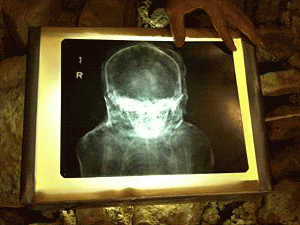
“Also this year, we were able to bring an x-ray machine on site which will help us do more check ups on the mummies and find out why they died,” he added.
The site became a cemetery under 26th Dynasty ruler Ankkaenre, who ruled from 526 to 525 BC, but at least two thirds of the finds in the area are from the Roman period (30 BC-AD 395).